


Business Analyst Salary in the UK: Pay by Level and London
Need More Help? Book Your FREE Strategy Session With Our Career Coaches Today!
A business analyst salary is the yearly pay for a professional who studies how an organisation works and recommends changes to its processes, systems and services. In the UK, the average is about £46,000, with Indeed UK reporting £46,406 and Glassdoor £46,203. Juniors typically earn £24,000 to £33,000, analysts with a few years' experience earn £35,000 to £65,000, and senior analysts earn up to £80,000 or more. London pays noticeably higher, with a median of £69,750 in recruiter data.
This article shows you why published figures disagree, how to place yourself in the right pay band, what London adds, and which moves raise your pay fastest. Every figure comes from published UK sources and is a guide, not a promise.
Transform Learning Academy trains career changers with no tech background, including former teachers, pharmacists and police officers, for business analyst roles. Pay is a central question for them, so this article gives the answer you would want before committing to a new career.
Why business analyst salary figures differ so much
Published figures differ because each source measures something different: job adverts, self-reported pay or recruiter placement data. Knowing which one you are reading stops you from underselling yourself, or from chasing a number that does not match your experience.
What the main UK sources report
| Source | What it reports |
|---|---|
| National Careers Service | £23,000 (starter) to £55,000 (experienced) |
| Indeed UK | £30,273 to £71,240, average £46,406 |
| Glassdoor | Average £46,203, top earners £81,436 (90th percentile) |
| Prospects | £24,000 to £33,000 (junior), up to £80,000 and sometimes £100,000+ (experienced) |
| ITJobsWatch | Median £55,000 |
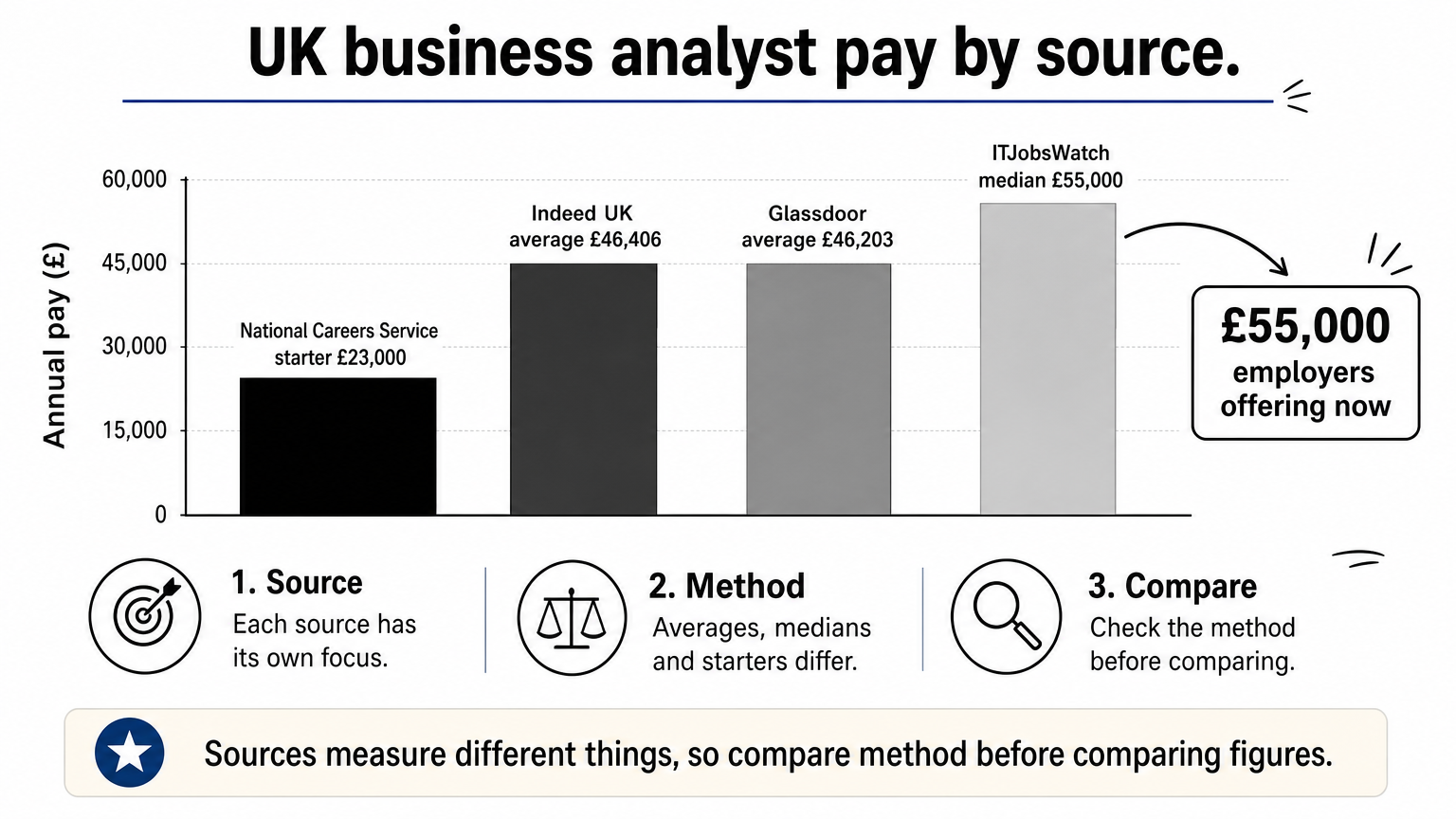
Taken together, the sources point to a typical UK salary of £46,000 to £55,000. The lower figures come from averages that include starters and part of the market that rarely advertises. ITJobsWatch tracks job vacancies, so its median of £55,000 shows what employers are offering now, not what every analyst currently earns.
Treat £46,000 as the UK average and £55,000 as a fair mid-career target.
Job titles that change the number
The label "business analyst" covers many titles, and the title shifts the pay. Employers use business systems analyst, IT business analyst, digital business analyst, process analyst and product owner for closely related work. A "Business Analyst I" grade usually marks the first rung of a grading ladder, so expect the junior band. A business IT analyst or IT business analyst role pays within the same overall range, with the top end in finance, technology and consultancy.
Hours are standard, at 37 to 39 a week according to the National Careers Service. That makes Glassdoor's average of £22 an hour consistent with an annual salary in the low to mid £40,000s.
How to find your business analyst salary band
Match your years of experience to a band, then adjust for sector, location and contract type. The bands below give you a realistic benchmark for the salary of a business analyst at each stage of a career.

Salary bands by experience
| Level | Typical pay |
|---|---|
| Graduate or junior | £24,000 to £33,000 |
| A few years' experience | £35,000 to £65,000 |
| Experienced or senior | Up to £80,000, sometimes £100,000+ |
| Contractor (experienced) | £400 to £550 a day |
Progress can be quick. Career guidance suggests £50,000 is reachable within three to six years, especially in London, finance and technology, and faster if you build analytics and stakeholder skills. The National Careers Service gives a wider spread, from £23,000 for starters to £55,000 for experienced analysts, so read it as a floor, not a ceiling.
Five steps to benchmark yourself
- Choose the band that matches your years of analysis experience.
- Add your sector. Finance, technology and consultancy sit at the top of each band.
- Adjust for location, because London bands run higher.
- Decide between permanent and contract work. Contractors earn a day rate, but they cover their own holiday, sickness and gaps between contracts.
- Check three live adverts for your exact title before you negotiate.
Your band is set by experience, then moved up or down by sector and location.
Business analyst salary in London
A London business analyst salary runs well above the national picture. Robert Half reports a range of £49,250 to £82,250, with a median of £69,750 and a 75th percentile of £82,250.

London figures compared with the UK
| Measure | UK | London |
|---|---|---|
| Typical pay | About £46,000 average | £69,750 median |
| Range | £30,273 to £71,240 (Indeed UK) | £49,250 to £82,250 |
| Finance analysts | Up to £80,000 for experienced staff | £55,000 to £75,000 (Morgan McKinley) |
The sources use different methods, so treat the gap as indicative. The pattern is clear, though. The London median sits above the UK average by a wide margin, and even the bottom of the London range is higher than many UK averages.
What the London premium means for you
Higher pay comes with higher living costs, so compare take-home pay against rent and commuting before you celebrate. Many London employers are banks, insurers and consultancies, which explains why finance pays so well in the capital. Some employers offer London rates for hybrid roles and others adjust pay by where you live, so ask which policy applies before you accept an offer.
London lifts a business analyst salary by thousands, but only after you account for the cost of living.
How to raise your business analyst salary
The fastest rises come from moving into a higher-paying sector, adding in-demand skills and credentials, and progressing to senior or contract work. Each of these moves is open to you, whatever your starting point.
Moves that lift your pay
- Change sector. Finance, technology and consultancy pay the most, with some senior roles passing £100,000.
- Add data skills. Analytics and data modelling turn a generalist into a specialist.
- Learn agile. The National Careers Service recommends agile project management as useful knowledge for the role.
- Gain recognised credentials. Professional bodies such as BCS and IIBA offer certifications and networking that employers recognise.
- Specialise or contract. Digital transformation, data analytics and consultancy lead to senior posts, and experienced analysts can charge £400 to £550 a day.
Starting without a degree or tech background
Any degree that builds analytical skills can help, but business analysis without a degree is a real route too. The National Careers Service lists apprenticeships and direct applications for people with several years in project management, consulting or IT. If you are changing careers, expect to enter in the junior band of £24,000 to £33,000 and grow from there.
Structured training shortens that climb. Our Business Analysis Programme combines professional certification, hands-on project experience and career support, so you arrive at interviews with evidence of practical business analysis work, not only theory.
Your first role sets your starting band, but skills and sector decide how quickly you leave it.
Where your pay should land
The numbers agree more than they first appear. A business analyst salary in the UK averages about £46,000, starts at £24,000 to £33,000, reaches £35,000 to £65,000 with experience and can pass £80,000 in senior and finance roles. London lifts those figures, with a median of £69,750, though higher living costs offset part of the gain.
Use the bands, check your sector and location, and test your target against live adverts for your exact title. Then focus on the moves that raise pay: data skills, recognised credentials and a step into finance, technology or consultancy.
If you want a structured route into the profession, explore the Transform Learning Academy Business Analysis Programme and see how the training, project experience and career support fit your plans.


