


5 Types of Remote Business Analyst Jobs in the UK and Pay
Need More Help? Book Your FREE Strategy Session With Our Career Coaches Today!
The best remote business analyst jobs are the ones that are genuinely remote, state their pay up front and match the experience you have now. In the UK, recent adverts fall into five types. Contract roles suit experienced analysts chasing day rates of about £450 to £650. Permanent roles suit people who want a salary of roughly £50,000 to £75,000. Entry-level roles, at around £40,000, suit newcomers, while platform and cleared roles reward a niche.
The trouble is that a search for business analyst remote jobs returns a muddle. Job boards mix in data entry, sales operations and consultancy listings, and many adverts labelled remote quietly ask for two or three days on site. You can lose an evening opening listings that were never a fit.
This guide sorts the market into five role types. For each one it shows what it pays, how the contract works, who it suits and which job boards to use. Transform Learning Academy trains career changers into business analysis, so we have written it for newcomers as much as for working analysts. The pay figures come from recent UK adverts, so check each live listing before you rely on them.
1. Contract remote business analyst roles
Contract work is where remote business analyst jobs pay most, with advertised rates of about £450 to £650 a day for most roles. Clients hire a contractor for a defined programme, often three to six months, and expect you to be productive within days. You are paid per day worked, so the headline rate needs careful reading.
Pay and contract terms
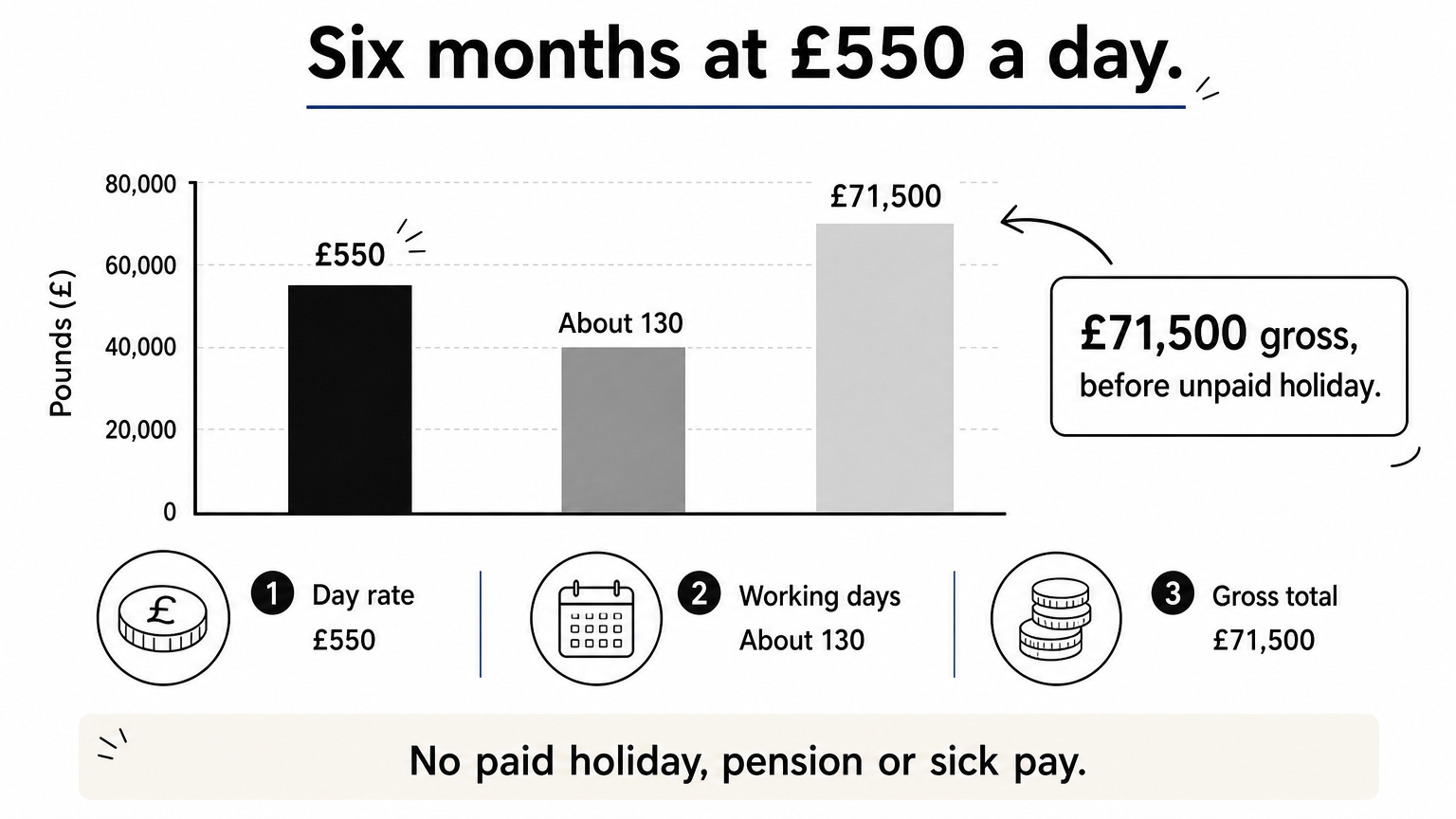
Take a £550 day rate on a six-month contract. That is roughly 130 working days, so about £71,500 gross. It looks far above a permanent salary, but it includes no paid holiday, pension or sick pay, and any gap between contracts comes out of it.
- Day rate: £450 to £650 covers most listings, and senior or specialist roles go higher.
- Length: three to twelve months, often with scope to extend.
- IR35: adverts say "inside" or "outside". Inside means you are taxed much like an employee, usually through an umbrella company. Outside leaves you more control over your own tax.
Who it suits and where to search
Contracting suits analysts with several years of delivery behind them, because clients rarely train contractors. You need a CV of delivered projects and a tolerance for short notice and gaps between roles.
Search CWJobs and Totaljobs, which both let you filter by contract, and Reed, which shows the contract type on each advert. Read the location line closely. "Remote with occasional site attendance" is not fully remote. Remote usually means you can work from anywhere, while work from home means your own address, so check which one the advert means.
Compare a day rate with a salary only after you subtract unpaid holiday and gaps between contracts.
2. Permanent remote business analyst roles
Permanent roles trade the top day rates for a salary, a pension and holiday pay, and recent adverts sit at about £50,000 to £75,000. One senior advert offered £68,000 to £73,000 with a contributory pension and life assurance. Fully remote permanent posts are rarer than hybrid ones, which often ask for two or three office days.
Pay and contract terms
Business analyst salary climbs with seniority and sector. Financial services regulatory work, such as MiFID transaction reporting, advertised £50,000 to £75,000 depending on level. Some "permanent" adverts are actually fixed-term, so read the small print.
- Mid-level roles: commonly £50,000 to £60,000.
- Senior roles: roughly £68,000 to £75,000.
- Fixed-term contracts: a 12-month Dynamics 365 finance role offered £55,000 to £60,000, with two to three days a week on site.
Who it suits and where to search
This route suits analysts who want predictable income, employer benefits and a longer relationship with one business. It is also the natural path towards senior analyst, product owner or business change posts.
Use LinkedIn, Indeed, Reed and Glassdoor. Glassdoor shows company ratings and salary data beside each opening, which helps you compare employers. Apply the remote filter, then scan every advert for days on site and for "FTC", which marks a fixed-term contract.
A permanent advert that lists office days is a hybrid role, so read the working pattern before you apply.
3. Graduate and entry-level remote roles
Entry-level remote business analyst jobs exist but are scarce, and most start at around £40,000. A recent remote graduate product owner role was advertised at that salary, and some consultancy programmes advertise remote analyst posts too. Most employers still prefer to bring juniors in on site or hybrid, so they can learn alongside a team.

Pay and contract terms
Pay is modest, but the ladder up is steep. Search for business analyst job titles such as junior business analyst, graduate analyst, business support analyst and graduate product owner.
- Typical pay: about £40,000 in a recent graduate advert.
- Contract type: permanent or a graduate scheme, rarely contract work, because clients want experienced hands.
- Skills asked for: Agile delivery, process mapping, clear requirements writing and strong communication.
Who it suits and where to search
This path suits graduates and career changers who can show evidence rather than years. Employers worry about a lack of experience, so a certification that needs no experience and a real project close the gap. Our Business Analysis programme, for example, takes about three months at an average of five hours a week with no prerequisites. It includes two days of live training, the BCS business analysis foundation certification exam and live project experience.
Search Indeed and Reed for junior business analyst roles and "graduate business analyst". Wellfound is worth a look for startups, which sometimes want one analyst to cover several jobs. Apply to hybrid roles too, because a few office days are often the price of a first role.
With no experience, a recognised certification plus a real project on your CV does more than another batch of applications.
4. Platform and systems specialist roles
Systems roles tie you to a named platform such as Dynamics 365, Workday, ServiceNow or Salesforce, and they pay a premium for it. Recent day rates run from £450 to £850, and platform knowledge is often the deciding factor. Employers use these adverts to find analysts who have already worked on their system.

Pay and contract terms
Rates vary by platform and by how much of the work is remote. A finance systems analyst role covering Salesforce and ERP integration paid £550 to £650 a day, fully remote, for three months. A Workday HR or finance role in central government paid £450 to £500 a day, outside IR35, on a hybrid basis.
- Top of the range: a Charles River implementation role paid £700 to £850 a day, but it asked for two to three office days a week.
- Contract length: three to six months is typical.
- Permanent versions: these exist, but are usually fixed-term around a migration project.
Who it suits and where to search
Specialist work suits analysts who have used or implemented the platform before, for example as a super user or a configuration analyst. If you lack that, build adjacent proof with process maps, requirements documents and Agile ceremonies on your CV, then target the platform at your current employer first.
Search LinkedIn and CWJobs by platform name followed by "business analyst". Specialist adverts often bury the remote detail in the location line, such as "UK remote", so searching for the word remote alone misses them.
Search by platform name first and the word remote second, because specialist adverts hide it in the location line.
5. Cleared government and public sector roles
Government and defence-linked remote roles pay about £450 to £650 a day and usually require security clearance such as BPSS, SC or eDV. Most are remote with occasional site attendance. The clearance requirement thins out the competition, so these adverts reward analysts who already have it.
Pay and contract terms
Central government work tends to sit at £450 to £500 a day, while senior roles on large programmes reach £600 to £650. A six-month remote contract supporting a nuclear new build programme was advertised in that higher band, inside IR35.
- Clearance levels: BPSS is the baseline check, and SC and eDV are higher levels.
- Contract length: six months is common, often with extensions.
- IR35 status: it varies by advert, so check it every time.
Who it suits and where to search
These roles suit analysts who already hold active clearance or work for an employer that can sponsor it. You generally cannot apply for clearance yourself, because a sponsoring organisation has to request it. If an advert says "active SC clearance required", skip it unless you have it.
Check Civil Service Jobs for public sector posts, then look at Robert Walters and agency adverts on CWJobs and Totaljobs. Add "SC cleared" to your search to narrow the results.
If you hold active clearance, say so in the first line of your CV.
Choosing your route into remote analyst work
Match the role type to your experience. Experienced analysts will find the best pay in contract, platform and cleared roles, while permanent roles suit people who want stability. Newcomers should aim at entry-level posts, even hybrid ones, with proof of skills on the CV. Whatever you choose, read the working pattern line in every advert, because "remote" means different things to different employers.
If you are starting from another career, the quickest way to build that proof is a recognised certification and real project work. You can see how that fits together in our business analysis training with live project experience, then take your CV to the boards above.


